

The bank’s economists say in the latest Property Focus if the RBNZ delivers three more 25bp hikes as it expects, back-to-back six-month fixes will likely cost more than fixing for one year.
Wholesale interest rates have fallen over the past month, with much of the move occurring after the RBNZ unexpectedly left the OCR unchanged at 2.75% in October.
Markets had been expecting a 25bp hike, so the decision prompted a reassessment of how quickly the OCR may rise in the future.
That has flowed through to mortgage pricing, with six-month and one-year fixed rates edging lower.
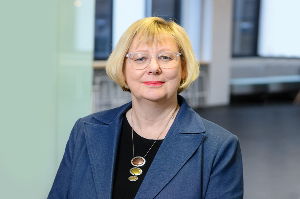
ANZ chief economist Sharon Zöllner says that doesn’t mean the OCR outlook has fundamentally changed.
“We still expect the RBNZ will need to hike again to ensure inflation returns sustainably to the 1-3% target. Inflation remains uncomfortably high and there are risks that elevated core inflation and the lower New Zealand dollar could see inflation persist.”
But at the same time, she says the level of unemployment and the forecast gradual pace of growth are expected to help to limit the persistence of inflation.
“That means that while we and markets expect the OCR to rise, it appears likely to peak considerably lower than it did in the wake of the pandemic.”
For mortgage borrowers, the fundamental trade-off between cost and certainty remains.
Shorter fixed terms still offer the cheapest rates but expose borrowers to the risk of having to refix at a higher rate later.
“If the OCR rises as we expect, fixing for six months is likely to prove more expensive than fixing for one year,” Zöllner says.
“The six- month rate is 20bp cheaper than the one-year rate, but ANZ expects 75bp of OCR hikes by March, and if that happens there is a high chance the six-month rate will be at least 40bp higher in six months’ time, wiping out any savings.
But if the RBNZ hikes more slowly, then fixing for six months and then refixing at expiry may end up cheaper.
“The point is, this strategy depends on the RBNZ going slower, and that isn’t what we or markets expect,” she says.
Beyond the six-month term, the choice is less clear-cut. Existing interest rates are neither particularly low relative to their average over the past decade, which would favour longer fixes, nor particularly high, which would favour shorter fixes.
However, there is a sufficiently large step up between the one-year rate and two-year rate (36bp), and between the two-year rate and three-year rate (24bp), for shorter terms to be worth considering for borrowers who are comfortable taking interest-rate risk.
Zöllner says breakevens indicate that future mortgage rates would need to remain near 6% over the coming years for three- to five-year fixes to end up cheaper than one- to two-year fixes on cost alone.
“That’s entirely possible, but it’s towards the high end of where mortgage rates have cycled around over the past decade.
“There is considerable uncertainty around the outlook. A weaker domestic economy or global wobbles could result in fewer OCR hikes than we expect.”
While a National-led government retaining office could see some home buyers return from the sidelines, as has happened after several previous elections, don’t expect any post-election shift to be large though, as interest rates remain the bigger driver of market trends, Zöllner says.



Comments
No comments yet.
Sign In to add your comment